
Navigating the First Steps in Learning Arabic
Stepping into the world of Arabic is a journey both rich and sometimes overwhelming. Many beginners feel lost in the sheer scale of the language—the different scripts, the distinct sounds, and the dizzying array of regional dialects. Before you can even master the difference between a Hamza and an ‘Ayn, the core question surfaces: where do I even begin? For anyone serious about understanding the intricacies that make up the vast world of the Arabic language, clarity and structure are paramount.
The reality is that Arabic is not just one language; it’s a family of living languages. This understanding is the cornerstone of effective study. When we speak about the global significance of Arabic, we’re talking about an ecosystem that influences business, politics, and culture across the Middle East and North Africa. With approximately 422 million people speaking Arabic worldwide, securing its place as the fifth most spoken language globally, according to Ethnologue data, the practical value of fluency is indisputable. But success hinges on choosing the right methodology from the start, a comprehensive Arabic language guide designed for real-world application, not just theoretical study.
Distinguishing Your Path: Modern Standard vs. Colloquial
Why the Dialect Choice Defines Your Learning Outcome
The most crucial decision in your learning process is differentiating between Modern Standard Arabic (MSA) and Colloquial dialects. MSA is the formal, written language—the consistent script you read in international news, formal literature, and university lectures across the Arab world. It acts as the linguistic glue that binds speakers from Morocco to Oman.
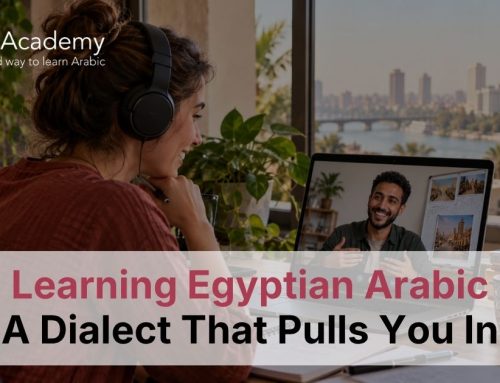
Conversely, Colloquial Arabic is what you hear in the souqs, in films, and among families. At Arab Academy, we focus specifically on Egyptian Colloquial Arabic (ECA). Why Egypt? Egyptian media, television, music, and film have historically dominated the region, making ECA perhaps the most widely understood dialect outside of its native country. It’s the closest thing to a common conversational denominator in the Arab world.
A common stumbling block we observe is when students focus exclusively on MSA for years. Take Omar, for example, a dedicated student who mastered complex MSA grammar. When he first landed in Cairo, he found himself adrift during simple interactions like buying bread or negotiating a taxi fare. While his reading was flawless, his ability to participate in the flow of daily life was severely limited. This is why our approach integrates both forms, ensuring that learners don’t just read the newspaper, but can also connect meaningfully with people on the street.
Why Choose a Specialized Arabic Language Website?
The Need for Proven Curriculum and Expert Instruction
In today’s digital landscape, generic language apps abound, but they often lack the foundational depth required for true mastery. When seeking resources for your language investment, you need more than flashy flashcards; you need a structured, pedagogical framework. This is the value a dedicated Arabic language website like ours provides.
We understand the gravity of trusting an educational provider. That is why Arab Academy adheres to high standards of instructional quality, a commitment recognized globally. We are proud to have been the trusted choice for linguistic instruction by prestigious institutions, including Duke University in the U.S. and the University of Cambridge in the UK. This trust stems from our methodology, which combines rigorous structure with highly personalized teaching.
When students receive immediate, one-on-one feedback, retention rates surge. Educational technology analysis consistently demonstrates that personalized tutoring sessions, where instruction is tailored to the individual’s cognitive pace and error patterns, lead to significantly faster progress compared to self-guided, generalized applications. We don’t just teach you the language; we provide a responsive environment where you are guided past your specific plateaus. Isn’t that the efficiency you’re looking for?
Flexible Learning Options
Tailored Programs Designed Around Your Life
Arab Academy understands the need for structured guidance when learning Arabic. We know that life work schedules, family commitments, and time zone differences often dictate the pace of learning. We don’t believe in a one-size-fits-all classroom model.
That’s why we offer a variety of flexible learning options to fit your schedule and budget, including self-paced courses and live one-on-one online classes. Whether you thrive on independent study guided by our robust curriculum or prefer the dynamic interaction of a dedicated instructor coaching you through complex concepts in real-time, we have a solution that fits. Our goal is to remove logistical barriers so you can focus entirely on your linguistic progress.
Frequently Asked Questions About Learning Arabic
Getting Specific Answers to Your Study Queries
What is the difference between MSA and Egyptian Colloquial Arabic (ECA)?
MSA (Modern Standard Arabic) is used in formal writing, news broadcasts, and speeches. ECA is the dialect spoken daily in Egypt and is highly beneficial for conversational fluency across the region due to the prevalence of Egyptian media.
Do you offer instruction in Quranic Arabic?
No, we specialize in Modern Standard Arabic (MSA) and Egyptian Colloquial Arabic (ECA) to ensure our students achieve fluency in contemporary, real-world communication.
How long does it take to become proficient in Arabic?
Proficiency depends heavily on your commitment and the intensity of your study. Students engaging in regular, live online classes typically reach conversational milestones much faster than those learning solely through self-paced means. Consistency is key.