
Unveiling the Unique Sound of Cairo’s Language
Egyptian Arabic stands out among other Arabic dialects due to its distinct pronunciation, unique vocabulary, and a melodic cadence shaped by centuries of cultural evolution. If you want to learn Egyptian Arabic, understanding these characteristics helps unlock a rich linguistic experience, especially when you immerse yourself in Cairo.
It’s a dialect that has truly carved its own path, offering a captivating challenge and a rewarding journey for language enthusiasts. What makes it so different, and why has it become so widely recognized across the Arab world?
The Rhythmic Heart of Egyptian Arabic: A Unique Soundscape
Unpacking the Pronunciation: What Makes it Distinct?
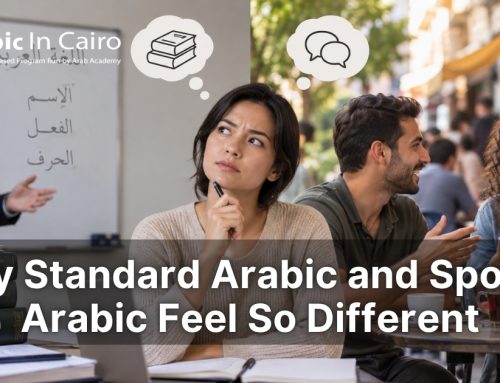
One of the most immediate differences you’ll notice in Egyptian Arabic is its pronunciation. While Modern Standard Arabic (MSA) features the ‘qāf’ (ق) sound and a ‘jīm’ (ج) sound, in many Egyptian words, the ‘qāf’ often transforms into a glottal stop (like the sound between ‘uh-oh’), or even disappears entirely. The ‘jīm’ sound, which is typically pronounced like the ‘j’ in ‘jump’ in MSA and other dialects, takes on a hard ‘g’ sound in Egyptian Arabic, as in ‘girl’.
For instance, the word for ‘heart’ (qalb) becomes ‘alb’, and ‘new’ (jadīd) becomes ‘gadīd’. This shift creates a softer, more flowing sound that sets it apart from its Gulf or Levantine counterparts. This unique phonological profile is a hallmark of the dialect, making it instantly recognizable.
Consider how the ‘th’ sound in English often becomes a ‘z’ sound for many Egyptians when speaking English, directly influenced by their native phonetics. These subtle yet significant changes are part of what gives Egyptian Arabic its characteristic rhythm and flow.
Beyond Pronunciation: Vocabulary and Expressions Rooted in Culture
Everyday Conversations: How Locals Communicate
Beyond pronunciation, Egyptian Arabic boasts a rich lexicon of words and phrases that are distinctly Egyptian, often influenced by historical interactions with other languages like Coptic, Turkish, French, and Italian. These influences have shaped everyday expressions, making the language vibrant and colourful.
For example, you’ll find unique question words like ‘fēn’ for ‘where’ instead of the more formal ‘ayna’. This directness and use of participles instead of conjugated verbs contribute to a more natural, conversational feel. It’s why learning Egyptian language means picking up these colloquialisms that truly reflect daily life in Egypt.
This dialect is not just about grammar; it’s about connecting with the pulse of Egyptian culture. Many expressions carry cultural nuances that you simply won’t find in other Arabic dialects. Learning these helps you appreciate Egyptian jokes, grasp song lyrics, and understand the depth of dialogue in Egyptian drama.
Why Cairo is the Ultimate Place to Learn Egyptian Arabic
Immersive Learning: Experience the Language Firsthand
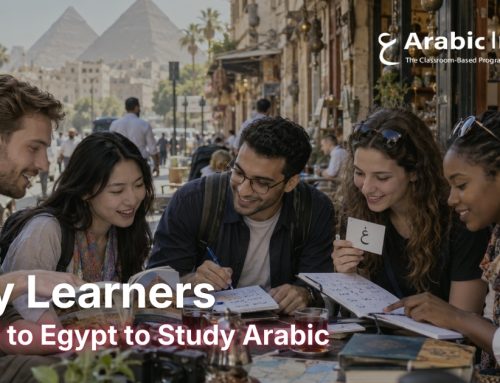
If you’re wondering how to learn Egyptian Arabic effectively, there’s no substitute for immersion. Cairo, the vibrant heart of Egypt, offers an unparalleled environment to truly grasp the language. Here, every street vendor, taxi driver, and cafe conversation becomes a real-world lesson. This daily exposure reinforces vocabulary, builds confidence, and develops listening and speaking skills organically.
Egyptian Arabic is the most widely understood spoken dialect across the Arab world, thanks to Egypt’s prolific film, music, and television industries. As of 2025, Egyptian Arabic boasts around 119 million speakers, making it one of the most spoken languages globally. This widespread media influence means that if you learn Egyptian Arabic, you gain a dialect that resonates far beyond Egypt’s borders.
Imagine ordering your favorite koshary or bargaining for a souvenir in a bustling market. These interactions are invaluable. In 2026, Ipsos data showed that Ramadan series in Egypt generated over 61,600 mentions and 240,000 interactions within just the first week, highlighting the sheer volume of cultural content available. This constant exposure is a powerful tool for anyone looking to learn Egyptian Arabic fast.
Your Path to Fluency in Egypt
A Student’s Journey: Mastering Egyptian Arabic in Cairo
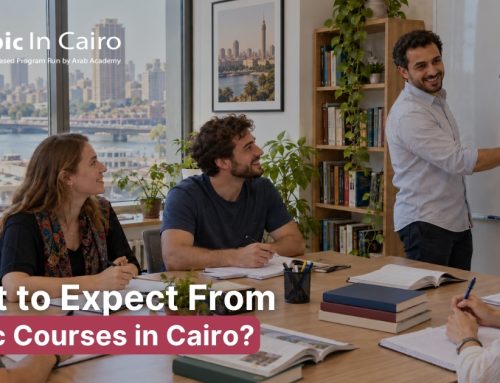
Our academy in Cairo provides a structured yet dynamic approach to help you master both Modern Standard Arabic (MSA) and Egyptian Colloquial Arabic (ECA). You can choose to focus on either, or combine both based on your learning objectives. This dual approach gives you the formal foundation of MSA, used in news and literature, alongside the practical, everyday communication of ECA.