
Embarking on a Journey Through Arabic Script
The elegance of Arabic script is captivating, isn’t it? For many, the visual beauty of its flowing lines and unique character forms is a primary draw to the language. Yet, moving from admiration to actual Arabic word-writing practice can feel like navigating a new landscape. It’s a skill that requires patience, precision, and the right guidance to master truly. This journey isn’t just about forming letters; it’s about connecting with a rich cultural heritage and opening doors to new forms of communication.
Globally, Arabic is spoken by over 422 million people, making it one of the most widely spoken languages, according to Ethnologue 2023 data. This widespread use underscores the practical value of mastering its written form, whether for professional growth, cultural immersion, or connecting with loved ones. Imagine the satisfaction of penning your first complete sentence, understanding the nuances of each stroke, and truly engaging with the language on a deeper level.
The Visual Journey of Arabic Writing: Beyond the Alphabet
Unveiling the Beauty of Arabic Script
When you first encounter Arabic script, it might seem like a series of distinct symbols, but the magic truly happens when these symbols connect. Understanding Arabic writing involves more than just memorizing the 28 letters; it’s about recognizing how they transform based on their position within a word, whether at the beginning, middle, or end. This dynamic nature is what gives Arabic its distinct flow and artistic quality, often compared to a visual melody.
Consider the letter ‘Haa’ (ه), for instance. Its appearance shifts dramatically, from an isolated circle to a small loop within a word, or a final flourish. This interconnectedness is a fresh insight for many new learners, moving beyond rote memorization to an appreciation of the script’s fluid architecture. It’s less about individual static shapes and more about a continuous, graceful movement, like a dance across the page. This is where the beauty of `understanding Arabic writing` truly comes alive.
Building Your Foundation: Effective Arabic Word Writing Practice
From Strokes to Sentences: A Practical Approach
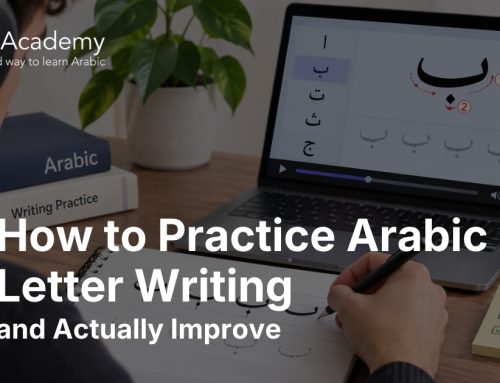
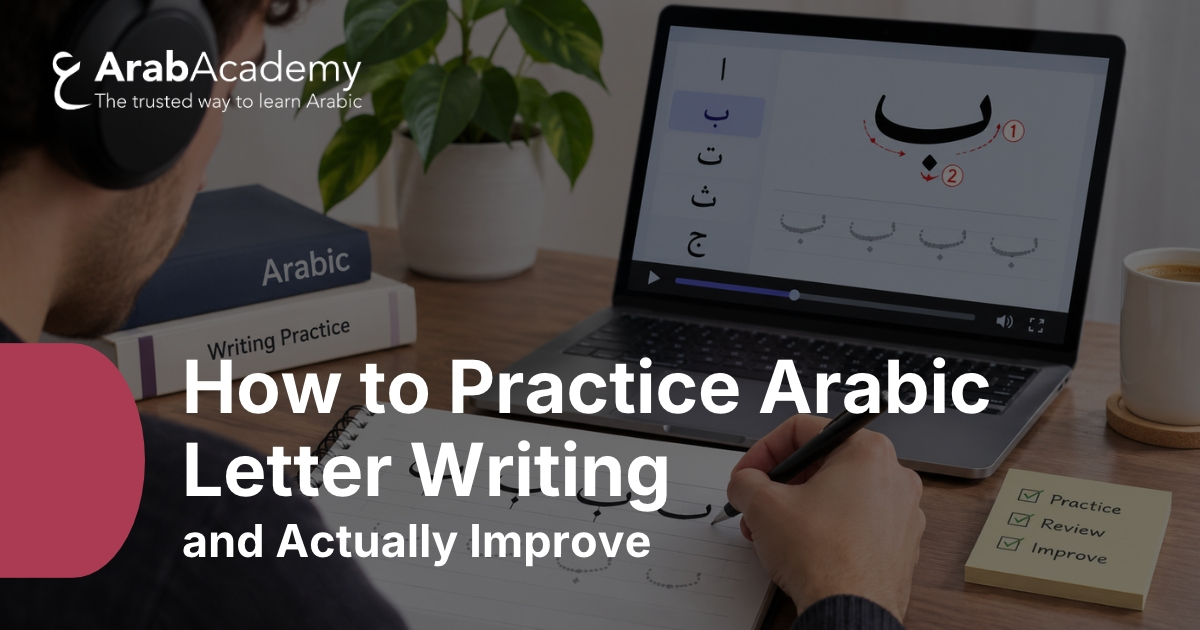
Consistent and structured Arabic words writing practice is the cornerstone of proficiency. It’s not enough to simply know the letters; you need to train your hand and eye to work in harmony. Many learners find tracing exercises incredibly beneficial in the initial stages, helping to build muscle memory for correct stroke order and direction. From there, copying words and short phrases gradually strengthens your ability to form words independently.
Sarah, a student from Canada, initially found connecting Arabic letters daunting. Her breakthrough came when she started using the Arab Academy’s guided worksheets, focusing on stroke order and letter variations within words. This consistent `practice writing Arabic words` transformed her hesitant strokes into confident script within weeks. The key, as Sarah discovered, was not just practice, but guided practice with immediate feedback, allowing her to correct mistakes before they became habits. This focused repetition, tailored to her pace, made all the difference in her journey to `learn Arabic writing`.
Your Path to Fluency: How Arab Academy Supports Learning Arabic Writing
Tailored Guidance for Every Learner
Arab Academy understands the need for structured guidance when learning Arabic. We know that every learner has a unique pace and preferred style, which is why we’ve designed our programs to be comprehensive and adaptable. A recent survey conducted by the National Council of Less Commonly Taught Languages (NCOLCTL) indicated that structured, instructor-led programs significantly boost learner retention and proficiency in complex languages. This highlights the value of expert guidance in your `learn Arabic writing` journey, providing the support system crucial for mastering the script.
Flexible Learning Options: We offer a variety of flexible learning options to fit your schedule and budget, including self-paced courses and live one-on-one online classes. Our curriculum is carefully crafted by native Arabic speakers, focusing on Modern Standard Arabic (MSA) for general communication and Egyptian Colloquial Arabic (ECA) for everyday conversation. It’s important to note that MSA and ECA courses are taught as separate programs, allowing for focused learning in each dialect. For our younger learners, our kids’ courses focus exclusively on MSA, building a strong foundation from an early age.