Arabic Language Course for Beginners: How to Start
Your First Steps to Speaking and Understanding Arabic
Starting an Arabic language course for beginners can open doors to a rich culture and new opportunities. The best way to begin is by choosing a structured program that aligns with your goals, whether that’s for travel, business, or connecting with heritage. Many effective Arabic courses for beginners focus on foundational grammar and vocabulary, providing a clear path forward.
Why Learn Arabic Now? A Gateway to Culture and Opportunity
Connecting with a Global Language
Have you ever considered the sheer breadth of the Arabic-speaking world? It’s more than just a language, it’s a bridge to diverse cultures, histories, and vibrant communities. Learning Arabic connects you with a global population and unlocks new perspectives.
Arabic is spoken by over 422 million people worldwide, making it one of the most widely spoken languages globally. This significant reach means new avenues for travel, business, and cultural exchange. Imagine understanding conversations during a trip to Egypt or engaging directly with business partners across the Middle East. The possibilities are truly expansive.
Beyond practical applications, learning Arabic offers a unique cognitive benefit. Studies often highlight how acquiring a new language can enhance problem-solving skills and improve memory retention. It’s not just about words; it’s about building new mental pathways.
Choosing the Right Path for Your Arabic Journey
Modern Standard Arabic vs. Egyptian Colloquial Arabic
When you decide to embark on a course for Arabic beginners, one of the first considerations is which dialect to learn. Arabic offers a fascinating linguistic landscape, with two main pathways commonly chosen by learners: Modern Standard Arabic (MSA) and Egyptian Colloquial Arabic (ECA). Each serves different purposes, and understanding these can guide your choice.
Liam, a student from the United States, initially wasn’t sure where to start. He wanted to understand news from the Arab world and communicate broadly. For him, Modern Standard Arabic was the clear choice, offering a universal foundation. Later, he considered adding Egyptian Colloquial Arabic to connect with friends he made during a visit to Cairo.
Arab Academy understands the need for structured guidance when learning Arabic. We focus on teaching MSA and ECA as distinct, separate courses, allowing you to choose the path that best fits your personal or professional objectives.
Modern Standard Arabic for Beginners: Your Foundation
The Universal Language of the Arab World
Modern Standard Arabic (MSA) is the formal version of the language, used in media, literature, official documents, and education across the Arab world. If your goal is to read the news, access classical texts, or communicate in formal settings, a modern standard Arabic for beginners course is your ideal starting point.
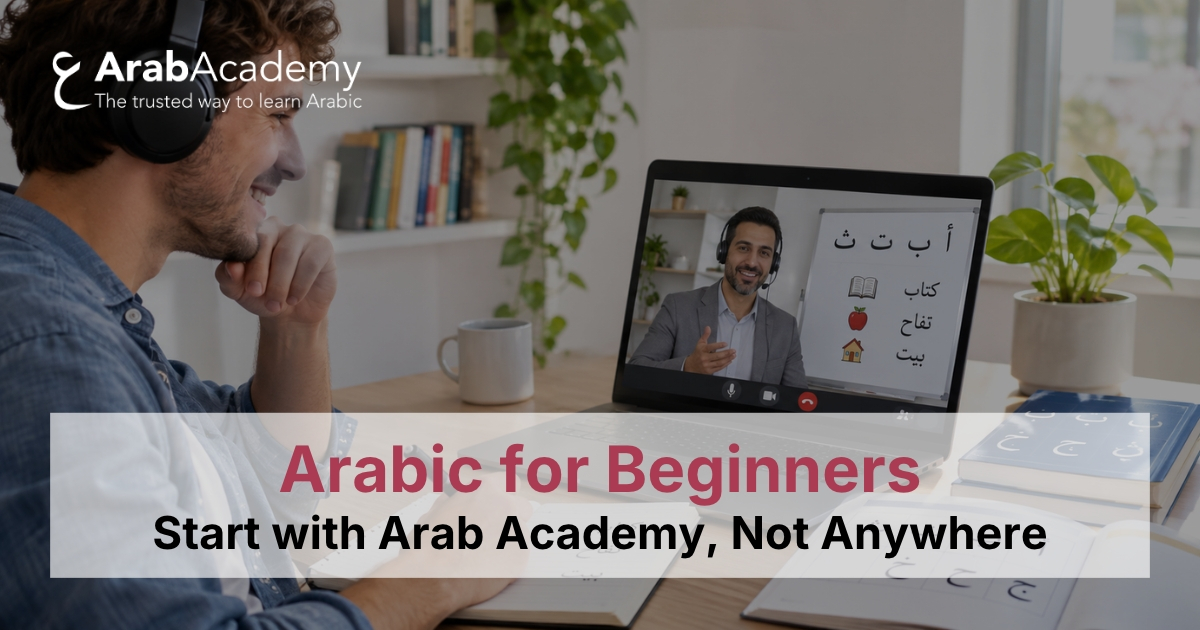
Arab Academy’s approach to an Arabic for beginners course in MSA provides a strong grammatical and lexical foundation. We teach you the core structures and vocabulary that are universally understood. Our Kids courses, for instance, focus exclusively on Modern Standard Arabic, laying a strong groundwork for younger learners.
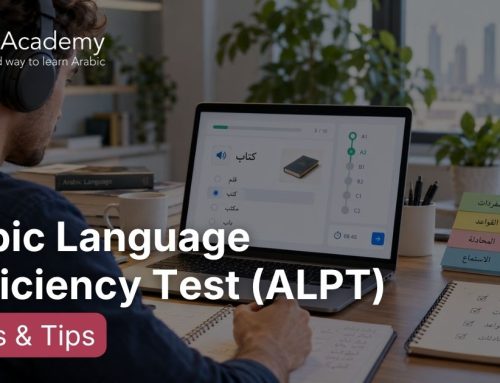
The Arabic Language Proficiency Test (ALPT), a key assessment tool, is designed specifically for Modern Standard Arabic, further emphasizing its importance as a foundational skill.
Egyptian Colloquial Arabic: Connecting with Daily Life
Engaging in Everyday Conversations
For those interested in everyday communication, particularly in Egypt, Egyptian Colloquial Arabic (ECA) is incredibly valuable. It’s the dialect you’ll hear in popular films, music, and daily conversations on the streets of Cairo or Alexandria. Learning ECA allows for deeper cultural immersion and more natural interactions.
Our Egyptian Colloquial Arabic courses at Arab Academy are designed to get you speaking quickly and confidently in real-life situations. We believe that connecting with the spoken language enhances your overall learning experience, whether you’re planning a trip or simply love Egyptian culture.
What to Look for in an Arabic Language Course for Beginners
Key Features for Effective Learning
Choosing the right Arabic courses for beginners can make all the difference in your learning journey. What truly helps learners succeed?
Look for a program with a well-structured curriculum, clear learning objectives, and experienced, native-speaking instructors. Research consistently shows that learning from native speakers significantly enhances pronunciation, cultural understanding, and fluency development. They bring an authentic perspective that textbooks alone cannot provide..
Share This Story, Choose Your Platform!