
Launching Your Learning Journey with an Effective Arabic Tutorial for Beginners
It often starts with a single, compelling sound, perhaps the resonant voice of Quranic recitation or the fast-paced chatter of Cairo’s streets. That spark is powerful, but turning inspiration into real progress requires structure. The most successful learners don’t stumble through random vocabulary lists; they treat Arabic as a series of achievable experiments. This beginner’s guide to Arabic is built from years of real teaching experience with non-native speakers, learning what truly works.
Many beginners question whether Arabic is worth the effort globally. In reality, the cultural and commercial influence of the Arabic-speaking world continues to grow. From media and diplomacy to business and travel, Arabic opens doors that few other languages can. Learning it is not just academic; it’s a practical investment in global engagement.
Navigating the Dialect Decision: MSA or ECA?
The biggest early challenge is choosing between Modern Standard Arabic (MSA) and a spoken dialect like Egyptian Colloquial Arabic (ECA). Treating this choice as your first learning experiment saves time and frustration.
MSA (Fus’ha) is the formal written language used across all Arabic-speaking countries. It’s essential for reading, news, academic study, and formal communication. If your goals involve education, media, or professional contexts, MSA is the logical starting point.
ECA, on the other hand, is the language of daily life in Egypt used in conversations, markets, films, and social settings. If you plan to travel, live, or work in Egypt, ECA delivers faster real-world results.
A helpful way to think about it: MSA is the operating system, while ECA is a powerful application. You need both eventually, but beginners should start with one clear focus to avoid overload. Arab Academy supports this approach by offering MSA and ECA as distinct, structured programs.
The Power of Personalized Learning Paths
One major reason learners quit is a lack of feedback. Traditional classrooms often can’t adapt to individual pace or pronunciation challenges, but language learning thrives on personalization.
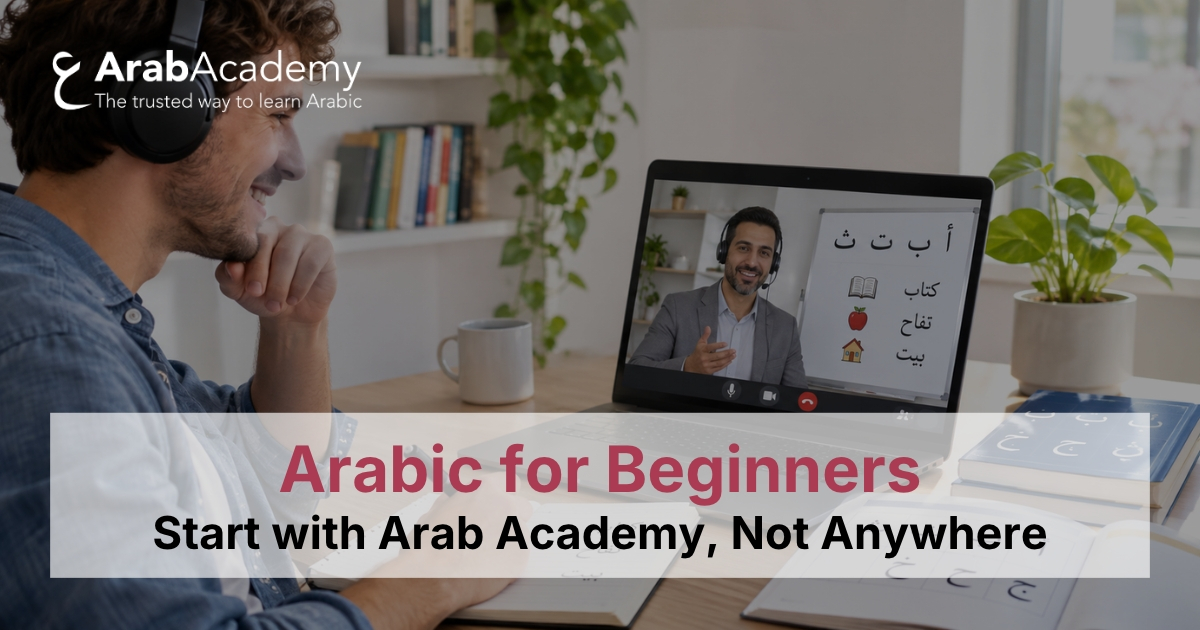
We see this constantly. Sarah, a U.S. student working in international development, struggled with pronunciation in group classes. After switching to live one-on-one online sessions, her tutor identified specific sound issues immediately. Within two weeks, she was confidently ordering food in ECA during guided simulations.
Arab Academy prioritizes flexibility through self-paced courses and live private classes, allowing learners to choose the format that best fits their schedule, learning style, and goals.
Anchoring Your Knowledge: Consistency Over Intensity
The “real experiment” approach favours consistency over burnout. Twenty minutes a day beats five hours once a week. Daily exposure allows the brain to absorb patterns naturally and builds lasting momentum.
What prevents self-study from stalling is immediate application, learning phrases tied to real situations, greetings, ordering coffee, describing your day, which anchor vocabulary in memory. Our curriculum emphasizes real-world context, not isolated definitions, and is trusted by universities in the U.S. and UK for its measurable progress.
Start small: learn five phrases you can use daily, even if only out loud to yourself. This micro-practice is far more effective than memorizing long verb lists. Arabic fluency is built brick by brick.
Frequently Asked Questions (FAQ)
Q: Should I learn MSA or ECA first?
A: Choose based on your immediate goal. MSA for reading and formal use; ECA for daily communication.
Q: How quickly can I become conversational?
A: With consistent daily practice and structured guidance, many learners form basic conversational sentences within 6–12 weeks.
Q: Do I need to learn the Arabic script immediately?
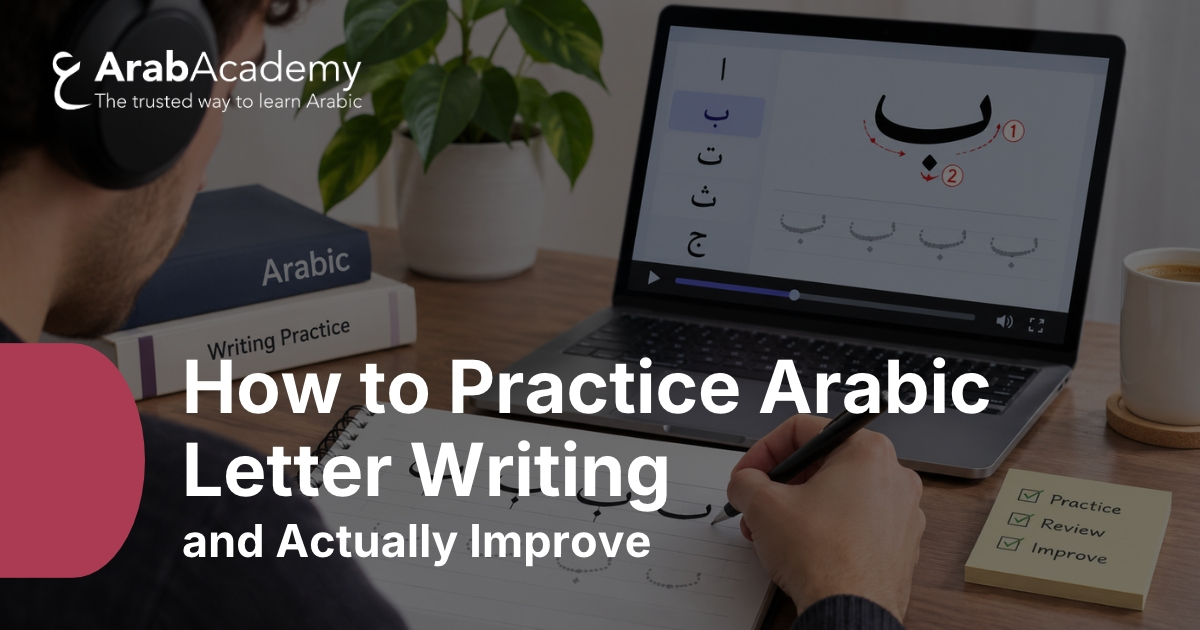
A: Yes. Learning the script early improves pronunciation and unlocks authentic resources. It’s essential for any serious beginner.