
Discovering MSA’s Vital Role in Egypt
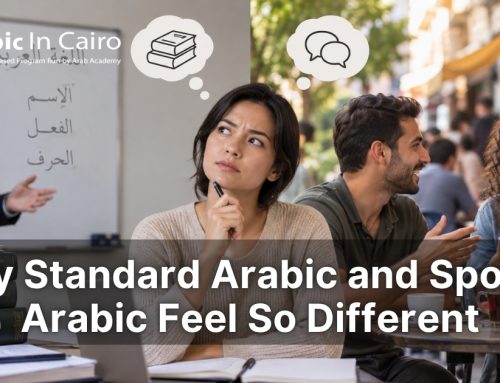
Modern Standard Arabic (MSA) is indeed used every day across the Arab world, serving as the formal written and spoken language in media, education, and official communications. While local dialects like Egyptian Colloquial Arabic (ECA) dominate casual conversation, understanding MSA is crucial for anyone looking to learn Modern Standard Arabic and engage deeply with the region’s culture and contemporary life, especially when immersed in a vibrant city like Cairo.
Many people wonder about the practical application of MSA outside of textbooks. The truth is, MSA acts as a linguistic bridge, connecting speakers from different Arab countries. Think of it as the common ground where diverse dialects meet. This makes it indispensable for understanding regional news, official documents, and contemporary literature.
For instance, if you pick up an Egyptian newspaper, tune into a pan-Arab news channel, or read a modern novel, you will encounter MSA. This widespread presence means that while you might chat with a shopkeeper in ECA, your ability to comprehend broader Arab discourse relies heavily on your MSA proficiency.
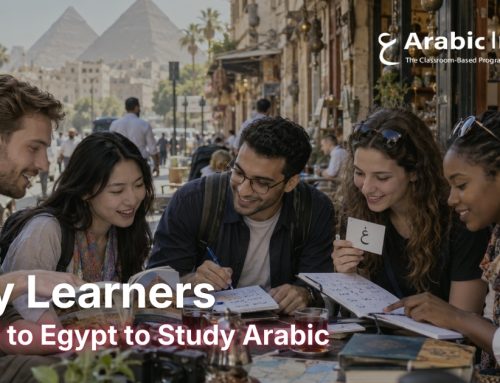
Visiting Egypt to Learn Modern Standard Arabic: Understanding Its Role
Why MSA Matters Beyond Formal Settings
Venturing to Egypt offers a unique context to grasp the dynamic interplay between MSA and local dialects. Here in Cairo, you’ll quickly observe how MSA underpins formal interactions, public speeches, and educational content. It’s not just a language of academia; it’s the language of broader communication.
Consider this: while you’re navigating the bustling streets of Cairo, you’ll hear ECA all around you. But step into a university lecture hall, watch a political debate on television, or read public announcements, and MSA takes center stage. This immediate, real-world exposure helps you internalize its usage patterns naturally.
With over 379 million Arabic speakers globally as of 2023, according to Statista, MSA plays a pivotal role in enabling communication across these diverse communities. Learning MSA in Egypt means you are not just memorizing grammar; you are witnessing a living language in action, observing its precise application in various daily scenarios.
How to Learn Modern Standard Arabic: Immersing Yourself in Egypt
The Unmatched Advantage of On-Site Learning in Cairo
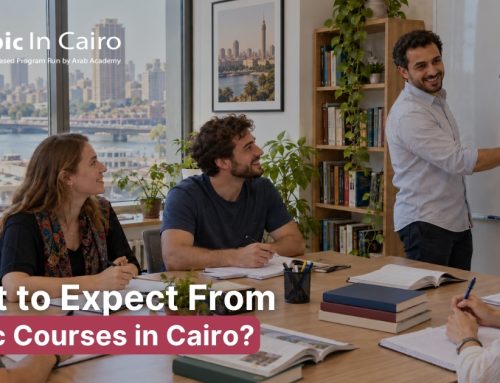
When considering how to learn Modern Standard Arabic, few methods rival the effectiveness of an immersive experience. Our programs in Cairo are designed to integrate you directly into the language’s natural environment. You’re not just learning in a classroom; you’re living the language every day.
Imagine starting your day with an MSA lesson, then practicing what you’ve learned by reading street signs, understanding news headlines, or engaging with local teachers and fellow students. This constant reinforcement accelerates your learning dramatically. You build confidence much faster when you can immediately apply new vocabulary and grammar.
A 2021 study in the Journal of Language Teaching and Research emphasized that immersive environments significantly enhance linguistic competence and cultural understanding far beyond classroom-only settings. While this study is a few years old, its core finding remains highly relevant today: direct engagement with a language and its culture is a powerful catalyst for fluency.
Discovering Arabic Culture While Learning in Egypt
Real-World Application and Cultural Immersion in Cairo
Beyond linguistic gains, learning Arabic in Egypt offers an incredible cultural journey. Cairo, with its rich history and vibrant contemporary scene, provides an unparalleled backdrop for your studies. You’ll find that immersing yourself in the local culture naturally reinforces your language acquisition.
Think about visiting the Egyptian Museum, exploring the Khan el-Khalili bazaar, or simply enjoying a traditional meal. Each experience provides a new context for the language you are learning. You start to connect words with real-life situations, making the language feel more alive and personal.
Consider Emily, a student from Canada who joined our program last year. She initially worried about using MSA outside the classroom. However, by attending cultural workshops and regularly interacting with her instructors and peers, she quickly realized how MSA appeared in formal settings, while ECA allowed her to connect with everyday Cairenes. ‘Being in Cairo,’ Emily shared, ‘made the language click in a way no textbook ever could. I started understanding the nuances and felt truly part of the community.’ Her experience highlights how practical application within a cultural context solidifies learning.