
Discovering Your Path to Fluency in Egypt
To effectively learn Arabic, especially for beginners, immersing yourself in a native-speaking environment is invaluable. Our academy in Cairo, Egypt, offers a unique opportunity to practice speaking Arabic daily through structured lessons and real-world interactions, focusing on Modern Standard Arabic (MSA) and Egyptian Colloquial Arabic (ECA). This direct approach accelerates your journey to conversational proficiency.
Why Egypt is Your Ideal Destination for Learning Arabic
Beyond the Classroom: Cultural Immersion in Cairo
Imagine stepping out of your morning Arabic class and immediately using new phrases to order a koshary or bargain at the Khan el-Khalili bazaar. This isn’t just a dream; it’s the daily reality of learning Arabic in Egypt. The country offers an unparalleled blend of rich history, vibrant culture, and a welcoming atmosphere that makes language acquisition feel less like study and more like an adventure.
Recent trends highlight a growing interest in cultural travel experiences. A 2025 report by the World Tourism Organization (UNWTO) indicated a significant rebound in cultural and educational tourism, with travellers actively seeking authentic immersion opportunities. Cairo, as a bustling metropolis, provides a living classroom where every interaction strengthens your linguistic muscles. Here, you’ll encounter a variety of accents and communication styles, building a robust foundation for practical use.
Choosing Your Arabic: MSA or Egyptian Colloquial?
Tailoring Your Learning Journey in Cairo
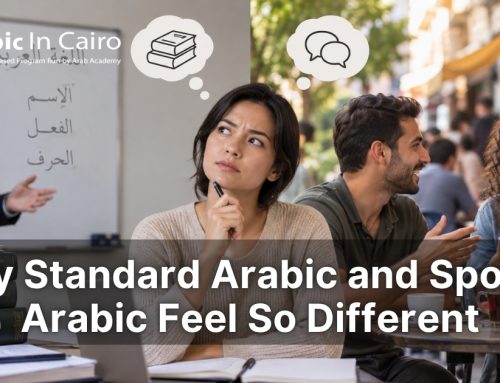
Deciding between Modern Standard Arabic (MSA) and Egyptian Colloquial Arabic (ECA) is a common starting point for many learners. MSA provides a solid foundation for reading, writing, and understanding formal media across the Arab world, acting as a linguistic bridge. ECA, on the other hand, is the most widely understood dialect in the Arab world due to Egypt’s cultural influence through film and music, making it incredibly practical for daily conversations and cultural integration.
At Arab Academy, we offer both MSA and ECA, either separately or in a combined program, depending on your personal learning objectives. Perhaps you aim to read classical texts and engage in pan-Arab discussions, making MSA your priority. Or maybe you want to effortlessly chat with locals in the vibrant streets of Cairo, for which ECA is essential. We help you define your path.
Many students find a dual approach beneficial. For instance, Sarah, a student from Canada, initially focused on MSA for its foundational grammar. After a few weeks, she integrated ECA into her studies. ‘Being able to switch between formal discussions in class and casual chats with vendors transformed my confidence,’ she shared. ‘I could understand the news and genuinely connect with people in their everyday language.’ This flexibility is key to comprehensive learning.
Effective Strategies to Practice Speaking Arabic Daily
Maximizing Your Immersion Experience
Consistent communication is the cornerstone of language acquisition. While formal lessons build your grammar and vocabulary, the real magic happens when you practice speaking Arabic daily outside the classroom. Here are some actionable strategies to supercharge your fluency:
- Engage with Locals: Don’t shy away from conversations. Whether it’s asking for directions, ordering food, or simply greeting shopkeepers, every interaction is a chance to use what you’ve learned. Egyptians are generally very welcoming and appreciate efforts to speak their language.
- Participate in Cultural Activities: Join local events, visit museums, or attend workshops. These settings naturally encourage communication and expose you to authentic language use in context. Consider visiting the Egyptian Museum or exploring Islamic Cairo.
- Utilize Media: Watch Egyptian TV shows or listen to local music. Even if you don’t understand every word, it helps attune your ear to pronunciation and natural speech patterns. Platforms like Shahid are popular for Egyptian series.
- Review and Rehearse: Dedicate time each day to review new vocabulary and phrases. Practice saying them aloud, even if it’s just to yourself. This reinforces learning and builds muscle memory for your mouth and tongue.
- Keep a Language Journal: Write down new words, interesting phrases you hear, and even short reflections in Arabic. This combines writing practice with active recall, strengthening your overall grasp of the language.