
Navigating the First Steps of Your Arabic Learning Journey
Deciding to embark on an online Arabic course is a commitment, and often, the first two weeks feel like navigating a completely new world. You might be staring at the swirling script, wondering if you’ll ever manage to read a menu or hold a simple greeting. Let’s be clear: the early stages are not about achieving fluency; they are about building a bedrock of cognitive comfort. When you start any language journey, especially one like Arabic, which uses a non-Latin alphabet, structure is everything. Arab Academy understands the need for structured guidance when learning Arabic. We know that the greatest initial barrier for students is the sheer novelty of the script and the sound system.
The initial curriculum is meticulously designed to break down that perceived wall into manageable bricks. Our focus is immediate engagement, ensuring that while the alphabet is challenging, the sense of accomplishment arrives quickly. It’s not just about memorizing; it’s about recognizing patterns and understanding how context changes meaning. That early momentum is critical.
The Initial Dive: Mastering the Basics of the Arabic Script
Cracking the Code of the 28 Letters
For many learners, especially those used to English or other European languages, reading right-to-left and the flowing, connected letters can feel a bit tricky at first. Unlike English, where a letter often has several sounds (think ‘c’ in ‘cat’ versus ‘city’), Arabic sound-to-symbol correspondence is remarkably consistent, which is a massive advantage once the symbols themselves are learned.
The U.S. State Department’s Foreign Service Institute (FSI) consistently ranks Arabic as a Category IV language, requiring significant structured effort to reach professional working proficiency. This isn’t meant to intimidate you, but to validate why a dedicated approach is necessary. Why does this statistic matter? Because it proves that relying solely on casual exposure won’t work, a structured course gives you the efficient roadmap required to master the fundamentals quickly.
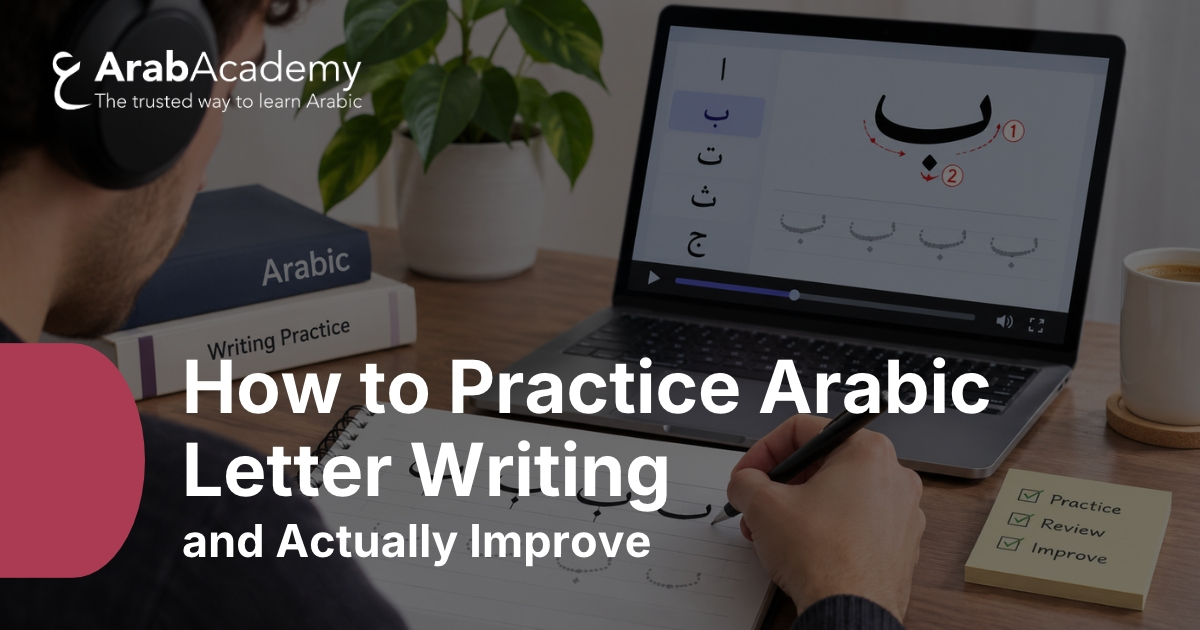
In the first week, you will internalize that Arabic letters change shape based on their position (initial, medial, final, or isolated). This is where the visual memory starts working overtime. We move past simple flashcards into contextual reading almost immediately, ensuring you’re seeing the letters used in simple words like “bāb” (door) or “ismī” (my name), anchoring the theory in immediate practice.
Building Foundational Conversation Skills
Beyond the Alphabet: Greetings and Survival Phrases
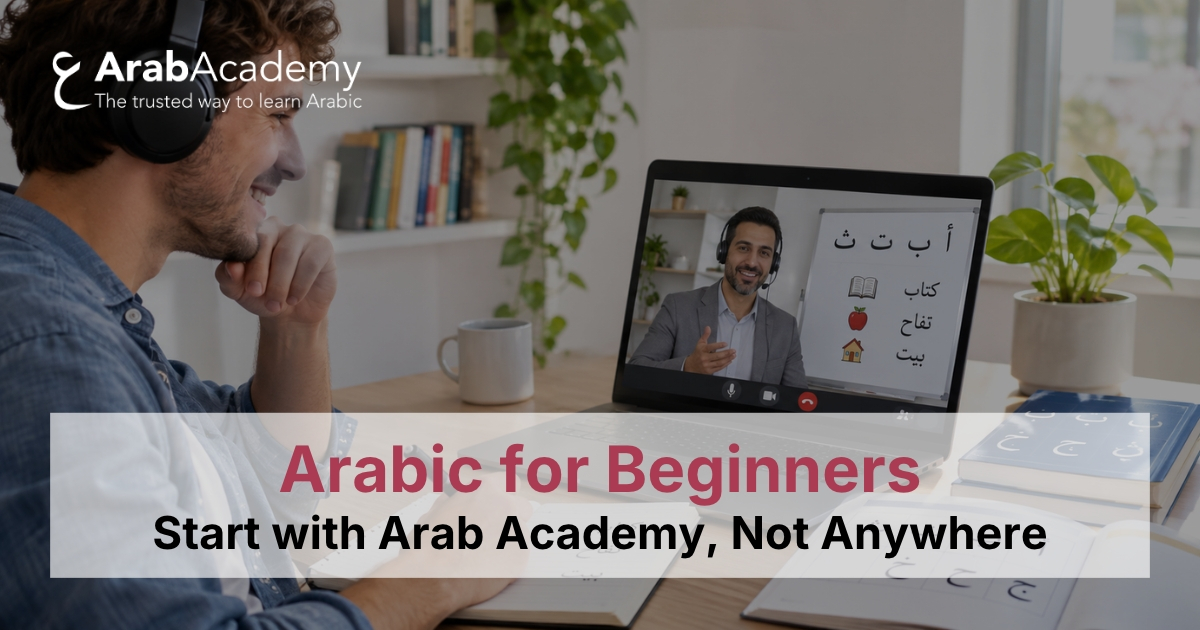
Once the script is introduced, the true fun begins: putting sounds to use. If you are taking an Arabic language for beginners course, the second major phase is focused on practical, immediate communication. We zero in on foundational introductions. Think about the classic scenario: ‘What is your name? Where are you from? How are you?’ These seemingly simple phrases are the core engine of initial interaction. In the first few live one-on-one online classes, you will spend time perfecting pronunciation—not just the sounds that map easily to English, but the challenging guttural sounds unique to Arabic, like the ‘ayn or the ‘kha.
A recent survey compiled by language learning analysts showed that motivation is sustained highest when learners can use their new language within the first month. This emphasizes the need to move rapidly from theory to dialogue. For instance, in an introductory ECA lesson, a student might practice a short exchange: ‘ izzayak? Ana min Canada. Inta?’ (How are you? I am from Canada. And you? This small narrative snippet showcases that you aren’t just rote-learning vocabulary; you are building identity in the language.
The Strategic Edge of a Structured Arabic Learning Course
Flexibility Meets Rigour in Digital Education
Why choose a structured Arabic learning course over casual apps or textbooks? Because structure provides accountability and personalization. We are proud to be trusted by universities like Duke and Cambridge, a testament to the rigour and quality embedded in our methods. Arab Academy’s methodology ensures that complex grammatical concepts, like verb conjugation or the dual form, are introduced incrementally.
Flexible Learning Options: We offer a range of flexible learning options tailored to your schedule and budget, including self-paced courses and live, one-on-one online classes. This blended approach addresses the diverse needs of adult learners globally. It allows, for example, a professional working in London to complete their writing exercises asynchronously, then join a dedicated session with their instructor at a convenient time to practice complex verbal patterns.
In these vital first weeks, you aren’t just absorbing information; you are redefining how your brain processes language. The greatest insight gained early on is realizing that fluency isn’t a single destination, but rather the cumulative effect of small, highly specific lessons mastered repeatedly. By the end of the initial cycle, you should be able to recognize your name written in Arabic, recite common greetings, and confidently articulate whether you are learning MSA or ECA—a significant milestone that sets the stage for exponential growth.
FAQ
Common Questions About Starting Your Arabic Journey
Is Arabic writing as difficult as it looks? The script is unfamiliar, but it is highly phonetic and consistent. The main challenge is recognizing the different shapes a letter takes depending on its placement in a word (initial, medial, final). Our early weeks focus solely on breaking down this visual complexity into a simple, predictable system.
What is the difference between Modern Standard Arabic (MSA) and Colloquial Arabic? MSA is the universal form used in written media, official speeches, and broadcasting across the Arab world. At Arab Academy, each student can choose the version that best fits their learning goals.