
Laying the True Foundation for Arabic Fluency
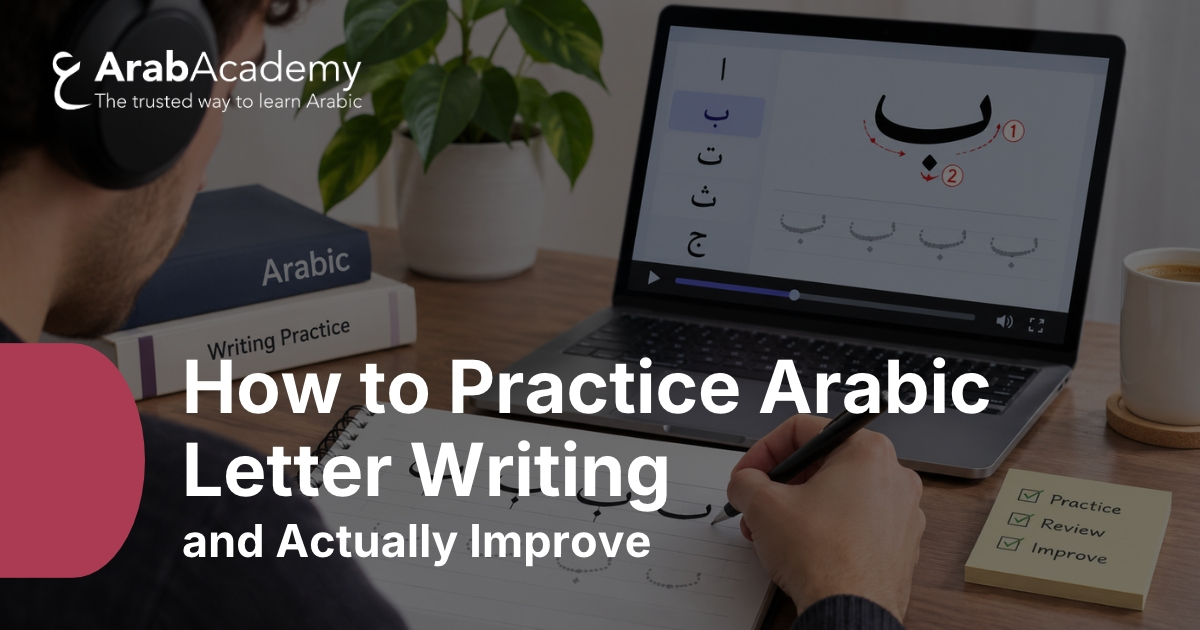
Starting any new linguistic endeavour is exciting, and learning Arabic is particularly rewarding because the script, while beautiful, is so inherently logical. Yet many new students dive into memorising the 28 letters in sequence, often feeling overwhelmed before they even try to form a simple word. To truly build reading fluency, we must shift the focus immediately from mere shape identification to sound production and application. This foundational approach is key to successfully navigating your Arabic alphabet guide.
When considering initial Arabic alphabet lessons, the goal isn’t just to recognize the Alif or Baa’; it’s to internalize how that letter sounds when it breathes life into a syllable. This immediate practical application prevents the common pitfall of having to ‘re-learn’ the letters in context later on. After all, the quicker you can decipher street signs in Cairo or read simple headlines, the more motivated you’ll be to continue. According to a 2023 report by Coursera and the World Economic Forum, structured curricula that prioritize practical application in the initial 20% of study time lead to completion rates 40% higher than purely theoretical approaches. That data strongly underscores the need for application over abstraction right from the start.
The Essential First Step: Mastering Letter Sounds and Shapes
Moving Beyond Rote Memorisation to Phonetic Accuracy
The very first phase of instruction should be an intense focus on the articulation points (Makharij) of each sound. Arabic contains sounds not found in English, which require subtle shifts in mouth, tongue, and throat position. If you master the sound accurately from day one, you build strong phonetic muscle memory. Think about the difference between the light Taa’ and the emphatic Taa’; misunderstanding this distinction fundamentally alters the meaning of the word. Simply seeing the shape is only half the battle, isn’t it?
When Mark started his Modern Standard Arabic (MSA) journey with us, he initially struggled because he was trying to match the Arabic letters to their closest English equivalents. We immediately shifted his focus to shadowing native speakers and drilling the subtle differences in the three ‘H’ sounds. Within two weeks, his reading speed and comprehension improved dramatically, simply because he was hearing the sounds accurately in his head rather than approximating them with English vowels.
Beyond the Basics: The Crucial Role of Harakat (Short Vowels)
The True Engine of Arabic Reading and Pronunciation
Here is the single most effective piece of advice for beginners: Do not treat the short vowels, the Harakat (Fatha, Damma, Kasra, and Sukoon), as an optional add-on. They are the structural glue of the Arabic language. In many beginner Arabic alphabet lessons, the Harakat are introduced as an afterthought, often leading to slow, halting reading later on. Since Modern Standard Arabic texts, outside of the Quran and children’s books, rarely include the full set of Harakat, mastering them quickly is paramount.
We believe that once a student learns a set of letters, they must immediately practice those letters combined with the three main short vowels. This transforms the lesson from ‘this is the letter Ba‘ to ‘this is ba, bu, and bi.’ This instant combination training speeds up the recognition of root structures and common word patterns. This rapid integration ensures that students are prepared for real-world texts much sooner.
Support and Strategy: How Arab Academy Guides Your Beginning
Flexible Options for Focused Mastery
Arab Academy understands the need for structured guidance when learning Arabic. Our methodology, trusted by Universities in the U.S. and UK: Duke and Cambridge, focuses intensely on sound production and contextual application early on. Whether you are aiming for proficiency in MSA, which is standard across media and literature, or conversational fluency in Egyptian Colloquial Arabic (ECA), our initial alphabet training is designed to maximize immediate utility.