
Finding Your Voice in the Arab World
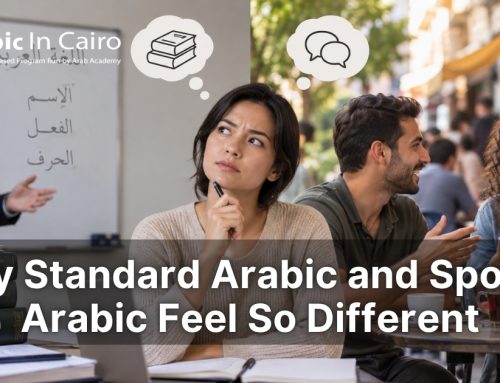
Choosing the most useful Arabic dialect often depends on your personal goals, but for broad communication and a rich cultural experience, Egyptian Colloquial Arabic (ECA) stands out. Its widespread understanding, largely due to Egypt’s media influence, makes it an excellent choice. Modern Standard Arabic (MSA) remains essential for formal contexts, and many learners find combining both offers a comprehensive skill set, especially when studying in a vibrant city like Cairo.
Why Immersion in Egypt is Your Best Bet
Learning the Language Where it Lives
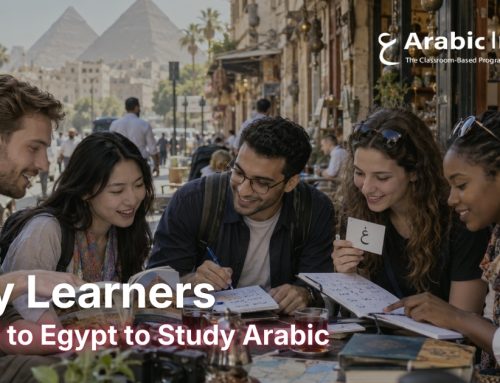
Learning Arabic isn’t just about grammar and vocabulary; it’s about stepping into a living, breathing culture. When you immerse yourself in Cairo, Egypt, the language becomes a part of your daily rhythm. You hear it in the bustling markets, on the streets, and in friendly conversations over a cup of tea. This constant exposure accelerates your learning in ways textbooks simply can’t.
Think about it: how often do you get to order your coffee, haggle for a souvenir, or ask for directions using the very phrases you just learned? This real-world application solidifies your understanding and builds confidence rapidly. It’s a dynamic environment that pushes you to think and respond in Arabic, transforming passive knowledge into active communication.
According to a 2023 survey by Preply, over 60% of language learners cite immersion as the most effective method for achieving fluency, particularly for languages with significant cultural nuances like Arabic. Being on the ground in Egypt, you’re not just learning words; you’re learning the context, the gestures, and the cultural cues that make communication truly effective.
The Global Reach of Egyptian Arabic
Understanding the ‘Hollywood’ of the Middle East
If you’re wondering about the most useful Arabic dialect for connecting with people across the Arab world, Egyptian Colloquial Arabic (ECA) frequently tops the list for its broad intelligibility. Egypt’s film industry, music, and television have historically dominated the region, making ECA familiar to millions beyond its borders. When you learn ECA in Cairo, you gain a dialect that acts as a bridge.
Consider the cultural impact: Egyptian films and TV series have been popular across the Middle East and North Africa for decades, creating a shared linguistic understanding. This means that while other dialects are crucial locally, ECA provides a remarkable foundation for general communication. It’s like learning a universally recognized accent within a larger language family.
Choosing Your Path: Modern Standard Arabic vs. Egyptian Colloquial
Tailoring Your Learning Journey
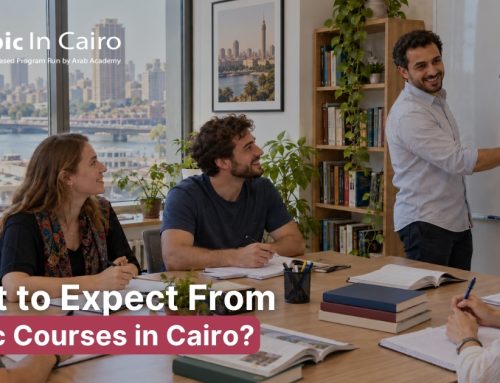
Many students arrive in Cairo asking whether to focus on Modern Standard Arabic (MSA) or Egyptian Colloquial Arabic (ECA). The good news is, our programs offer both, allowing you to tailor your studies to your specific ambitions. We understand that your goals might range from understanding news broadcasts to chatting with locals, and we’re here to guide you.
When you’re aiming for formal communication, academic pursuits, or reading contemporary Arabic literature and news, MSA is indispensable. It’s the official language of 22 Arab countries and serves as the lingua franca for formal written and spoken communication. Learning MSA gives you access to a vast body of knowledge and allows you to engage with pan-Arab media.
For daily interactions, exploring local culture, and building personal connections in Egypt, ECA is your key. It’s the language spoken by Egyptians in their everyday lives—in homes, shops, and social gatherings. Many learners find that starting with or integrating ECA quickly makes their time in Cairo much richer and more engaging. Our immersion programs allow you to learn either separately or combine both, giving you a comprehensive linguistic toolkit.
A Student’s Journey: Liam’s Experience in Cairo
From Beginner to Confident Speaker
Liam, a student from Canada, came to Cairo with a basic grasp of Arabic phrases. He opted for a combined program focusing heavily on Egyptian Colloquial Arabic with some MSA foundations. ‘Before coming, I worried about choosing the most useful Arabic dialect,’ Liam shared. ‘But the teachers here helped me see how both fit together. Within weeks, I was confidently ordering food and having simple conversations with shopkeepers. The immersion made all the difference.