
Your Path to Understanding the Arabic Script
Many people ask, “How can I read Arabic?” especially when faced with its beautiful, yet seemingly intricate, script. The good news is, learning how to read Arabic is a truly achievable goal. This guide provides a clear path to understanding the Arabic alphabet, mastering its unique letter connections, and confidently reading Arabic words and sentences.
Arabic is a language of immense cultural and historical significance, spoken by over 400 million people worldwide. Imagine connecting with this rich heritage, whether for travel, personal growth, or career opportunities. The journey begins with demystifying the script, one letter at a time.
Demystifying the Arabic Alphabet for Beginners
Understanding the Building Blocks of Arabic Reading
The first step in how to read Arabic for beginners involves getting acquainted with the Arabic alphabet. Unlike English, Arabic is read from right to left, and its 28 letters primarily represent consonants.
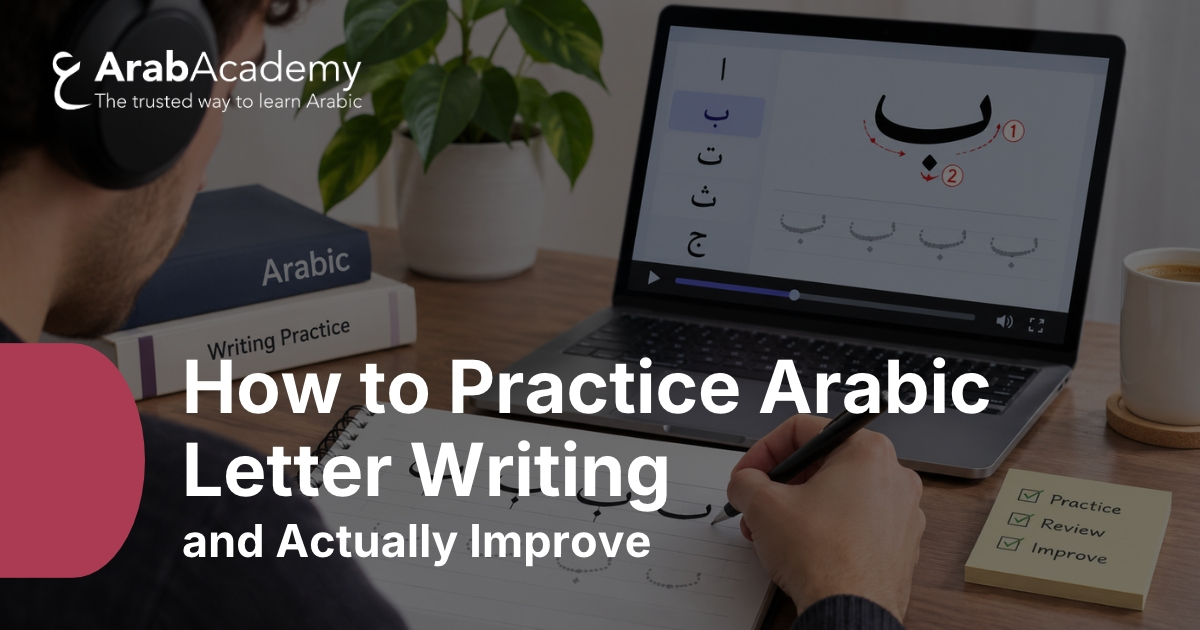
A common initial hurdle is seeing how Arabic letters change form depending on their position within a word. Each letter can have up to four shapes: isolated, initial, medial, and final. Think of it like a puzzle, where pieces connect differently based on where they fit. For instance, the letter ‘ب’ (ba) looks distinct when standing alone versus when it joins other letters. Understanding these forms is key to learning how to read Arabic letters effectively. Arab Academy understands the need for structured guidance when learning Arabic, ensuring you grasp these foundational concepts with ease.
Mastering Arabic Vowels and Diacritics
Bringing Arabic Words to Life with Pronunciation
Once you are familiar with the alphabet, the next crucial step in how to read Arabic is understanding its vowel system. Arabic uses diacritics, small marks placed above or below letters, to indicate short vowels and other pronunciation nuances. These marks, known as ‘harakaat,’ are vital for correctly pronouncing Arabic words.
Consider an example: the letter ‘د’ (dal) can become ‘da,’ ‘du,’ or ‘di’ with the addition of a Fatha, Damma, or Kasra, respectively. While these diacritics are often omitted in advanced texts, they are indispensable for those who learn how to read Arabic fast. They act as your pronunciation guide, ensuring you sound out words correctly. Beyond short vowels, you’ll encounter long vowels (represented by specific letters like ‘ا’, ‘و’, ‘ي’), the ‘sukoon’ (indicating no vowel sound), and ‘shaddah’ (for doubled consonants). Learning these elements will significantly improve your ability to read Arabic writing with accuracy.
Connecting Letters and Building Reading Fluency
From Individual Letters to Fluent Arabic Sentences
The real magic of learning how to read Arabic happens when you start connecting letters to form words. Most Arabic letters join together, creating a beautiful cursive flow. There are a few ‘non-connector’ letters, however, which pause the connection, making the following letter start a new segment. This is a pattern you quickly pick up with practice.
For instance, imagine reading ‘كتاب’ (kitaab – book). Each letter smoothly transitions into the next. This joining characteristic is fundamental to how you read Arabic. Regular practice with simple texts, focusing on recognizing letter forms in context, is incredibly beneficial. Many learners find that even short daily sessions build confidence rapidly. The global digital language learning market reached $35.86 billion in 2025 and is expected to grow to $43.45 billion in 2026 at a compound annual growth rate (CAGR) of 21.2%. This shows a clear trend towards effective online learning solutions.
Sarah, a recent Arab Academy student from the U.S., shared her experience: “I struggled initially with how to read Arabic words because of the connected script. But the structured lessons, especially the interactive exercises, made it click.
Your Journey to Learn How to Read and Write Arabic
Achieving Your Goals with Expert Guidance
If you’re wondering how to learn to read Arabic fast, consistency is your best friend. Start by mastering the alphabet, then move to short vowels, and gradually build up to reading full words and sentences. Don’t rush, but do practice regularly. Arab Academy offers comprehensive programs designed to help you not only read Arabic easily but also read and write the Arabic language effectively.